New Youth Advisory Council meant to help Columbia teens be heard

COLUMBIA — The Columbia City Council unanimously approved an ordinance Monday evening to create a Youth Advisory Council, which will give youth the ability to weigh in on civic issues.

The youth council will advise the City Council on youth-related issues, both by responding to requests from the City Council and making its own requests to the council.

The proposal was introduced to the City Council at its meeting on Dec 15.

“I am ecstatic,” said Sloane Scott, a Muriel Williams Battle High School junior, who has worked on this proposal for the past three years with Matt Leuchtmann, her gifted-education teacher.

“I am quite excited that the youth finally have the platform they need for their ideas to be heard,” Scott said.

She said that maybe the group would celebrate by holding its first meeting.

Scott said she thinks the first youth council meeting will be in mid-February. She said that the council wants to start with something simple, such as banning plastic bags in Columbia, and build credibility from there. Ultimately, members of the group want to work on homelessness.

The council’s goal is to be sustainable and effective at making changes in Columbia that pertain not only to youth but to everyone.

Becky Markt, director of Columbia’s Youth Community Coalition, said the youth council will “shape the youth as leaders in the community and beyond.”

“They will be given a clear message that their views really do matter,” Markt said.

Laura Nauser, Fifth Ward council member, said she is looking forward to seeing the growth and prosperity of this community.

“It always seems to be adults trying to come up with what is good for the kids, but we never ask them what they think, so this would be a great opportunity,” she said.

Barbara Hoppe, Sixth Ward council member, encouraged youth to apply for positions on the new council.

“I think this will bring good experience to youth and important ideas to the council and the city from youth,” she said.

High school students between 14 and 19 years old will be eligible to serve on the council. A minimum of 15 and as many as 21 members will be appointed by the City Council. Terms will be limited to three years.

The youth council may also ask the City Council to allow up to two of its members to serve as liaisons and nonvoting members for other city commissions or boards studying an issue that affects youth.

The City Council will also select two to three nonvoting adult liaisons to assist the youth council.

The Youth Advisory Council will hold meetings at least once each month during the school year. The youth council has the capacity to request funding from the City Council.

“If it is good for the kids, it is good for everybody, and this is good for the kids,” Markt said.

This story is published at Columbia Missourian, a local newspaper. 
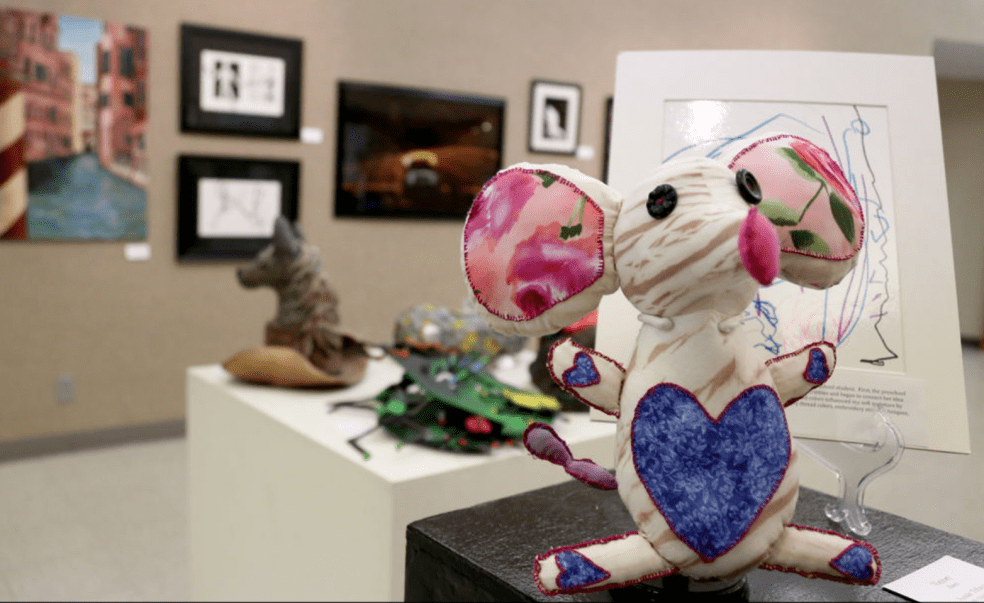
From classroom to gallery, art exhibit showcases students’ creativity

COLUMBIA — Farena Saburi, a senior at Hickman High School, spent more than five nights on her charcoal self-portrait.

She had never used charcoal before, so she spent hours watching videos and practicing with scrap paper. Her creation is now on display at Columbia College’s Sidney Larson Gallery.

Saburi’s drawing is among the approximately 190 pieces entered in the 10th annual Columbia College High School Art Competition and Exhibition, which runs  through Saturday. The exhibition showcases the talent of young artists from several high schools and a few home schools in Columbia and neighboring regions.

The show brings together a wide array of artwork across media and includes four categories: painting/drawing; printmaking/mixed media; photography and digital media; and sculpture, ceramics and jewelry/fibers. Most of the pieces are generated from original ideas and created by individual students.

Scott McMahon, assistant professor of art at Columbia College and the director of the gallery, said this is one of the largest high school art shows to date. Last year, they received around 130 entries.

“The works kept coming, even after the deadline,” McMahon said. “It is a pretty even show across media with a good balance of material, technique and subject matter.”

Emma Rynkewicz, a student at Hickman, contributed a graphite, pen and ink piece that depicts two abstracted mannequins. She named it “Distorted.”

“I was playing with the idea of the distorted realities,” she said. “I like the appearance of cracked mannequin.”

Traci Bolda is her art teacher at Hickman.

“Even though I am the teacher that gives the assignments and guides the process, I am always impressed with the results and the hard work that my students put into,” Bolda said.

Hickman has participated in this show for several years. After receiving information about the show from the college, Bolda talked about the event in class and encouraged students to participate. Hickman teachers also helped collect works, temporarily frame the 2-D entries and transport them to the college.

She and other art teachers are planning to walk their classes to the gallery.

“This show gives the kids a chance to see their arts in a professional setting, which they may not otherwise at this time in their lives,” Bolda said. “And it shows the kids what other high schools’ students are doing at the same time.”

McMahon said that this exhibition gives the students the experience of seeing their work finished and nicely presented in a gallery setting. “They can step back and look at what they created and feel proud about it,” he said.

After teaching art for 17 years, Bolda believes that art is an essential part of life. “We are teaching them that there are multiple solutions to the same problem; we are teaching them to take risks,” she said.

Students are also motivated by the recognition they could receive in the art community as well as financial support the college provides to the winners of each category. Awards include cash prizes, grants and tuition assistance for an intensive art program during the summer.

“A couple of students currently attend the college that were in previous high school art shows and summer art intensive programs,” McMahon said.

The closing reception will be held at 2 p.m. Saturday in the Sidney Larson Gallery. Awards for the four categories will be announced at that time.

McMahon said that the art faculty at Columbia College will go through the exhibition and select winners based on demonstrated excellence in technique and creativity.

“It is not an easy task,” McMahon said. “There are so many good works there.”

This story is published on Columbia Missourian, a local newspaper.
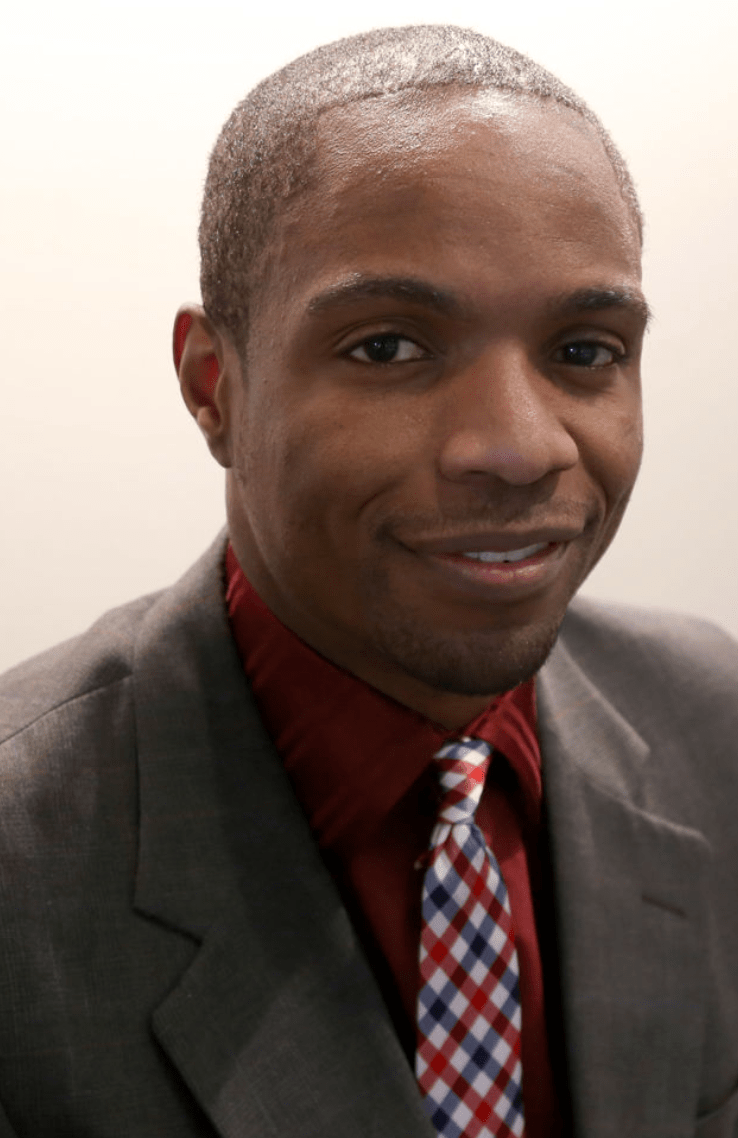
 

Robert B. Stewart Jr. plans to run for First Ward council seat

COLUMBIA — The Rev. Robert B. Stewart Jr. will never forget the lunch he had with former Kansas City Mayor Emanuel Cleaver II six years ago in a Chinese restaurant in Washington, D.C.

Stewart thought to himself, “This is a black male, a pastor, a mayor and a congressman. Is this possible?” It was this lunch, Stewart said, that made running for office — and making a difference — seem possible.

Stewart is looking to fill the First Ward Council seat. Ginny Chadwick, who was the First Ward councilmember, announced her resignation during a Columbia City Council meeting on Jan. 5.

“I was coaching my boys when I saw on my phone that she is going to resign,” Stewart said.

Stewart, 35, is the Hickman High School freshman basketball head coach. He is also a substitute teacher for Columbia Public Schools and a pastor for North Street United Methodist Church in Marshall and Elmwood United Methodist Church in Elmwood.

Stewart has a passion for youth and for equality for minorities. He believes that “education and communication are the beginnings of every change.”

“I love teaching,” he said. “I love the look on kids’ faces when they finally get something. I enjoy seeing kids improve, not just in grades, but in how they treat each other.”

But Stewart is concerned that some minority youth might have the mindset that they are not good enough to be leaders with few examples of minority leadership around them. He pointed out that the minority representation of students in the Columbia district is greater than that of classroom teachers.

Stewart said his world opened up when he saw Cleaver working in a leadership position.

“He had that much of an impact on me,” Stewart said. “I could imagine what it can do for an 8-year-old kid in a minority position.”

Stewart grew up in Columbia and got his undergraduate degree at MU in middle school math and social studies in 2003. He also played basketball for MU from 2002 to 2003.

After working in Kansas City and pursuing a four-year master’s degree in divinity at Saint Paul School of Theology, he came back to Columbia in 2012.

Stewart has been an active member of the Human Services Commission and the Kiwanis Club, a global volunteer organization. He said his experience on the commission made him realize the importance of effective communication.

“We can get things done if we communicate correctly and effectively — really listen to people, regardless what they look like, regardless of what stereotypes society puts on people, just listen to them first,” he said.

Growing up in Columbia and living in the First Ward helped him become who he is and accomplish his goals, Stewart said.

“I am very thankful for those people,” he said. “I think this is the best place for me to help others. This is just a way of giving back.”

A special election to replace Chadwick will take place on April. 7. Stewart is in the process of collecting signatures of support to file a petition of candidacy.

This story is published on Columbia Missourian, a Columbia local newspaper.

City rekindles talks of automated roll cart trash collection

COLUMBIA — City officials are poised to restart a community conversation about whether to switch to an automated rollcart system for trash collection.

Earlier this month, representatives of the Columbia Public Works Department and the Office of Sustainability made a presentation to the Columbia City Council that addressed the challenges of trash and recycling collection and proposed a rollcart system that they say could reduce the amount of trash going to the landfill as well as workers’ compensation claims and employee turnover among trash collectors.

Public Works Director John Glascock at a Jan. 5 council work session described the current system, in which residents dispose of trash in black plastic bags and recyclables in blue bags, as antiquated.

The city provides the bags for free. In a few neighborhoods, residents put their recyclables in plastic bins.

“We need a new system,” Glascock said. “We need something better than what we have.”

Roll carts also would allow a “pay as you throw” system in monthly bills that would rise with the amount of trash discarded. City staff is proposing the city offer three sizes of roll carts with a monthly charge of $15 to $20, depending on the size of cart a resident wants.

The proposal calls for continuing to offer trash bags as a premium service that would cost more. The city would charge a base rate of $12.50 per month, plus $1.50 per bag.

Public Works Department spokesman Steven Sapp said all of those charges are good estimates but remain subject to approval by the council.

Officials at the Jan. 5 meeting emphasized the automated system’s potential for increasing the city’s recycling rate. According to the presentation, Columbia’s diversion rate — the percentage of refuse that does not go to the landfill — is 17 percent. That’s half the national average.

Roll carts also would be expected to bring down employee turnover in the Solid Waste Division, which is now 68 percent. The city’s overall turnover rate is 8 percent.

“Nobody wants to do that type of work anymore,” Sapp said of trash collection.

Sapp noted that the job is labor intensive work, requiring employees to pick up 900 or more trash bags per day, regardless of the weather, for $10.75 to $12.75 per hour. Twenty-six employees are needed to cover all residential pickup routes. The city is short employees now.

Glascock described the job as dangerous, noting there have been fatalities, serious injuries and numerous minor injuries. Research indicates that workers’ compensation claims drop when automated systems are adopted.

Sapp said trash collectors would be put to work at the city recycling facility if an automated system is adopted.

“Our intention is not to lay any current employee off,” Sapp said.

A timetable proposed at the meeting shows the city moving toward an automated system by October 2017, when it would order carts and required equipment. It would expand the city recycling facility in fiscal 2018 and could have a roll cart system fully operational by fiscal 2019.

“We would not need to replace trucks to be able to handle automated collection,” Sapp said. The department plans to mount Curotto-Can attachments, at a cost of $35,000 to $40,000 apiece, on the front of existing trash trucks.

Over the long term, the reduction in workers’ compensation claims and other savings would offset the cost of adapting the trucks and buying and distributing carts, Sapp said.

“There is a capital outlay first, and then it has a return on the investment that helps pay for that,” he said.

City staff plans to launch a community “trash talk” over the next several months. It plans meetings in each of the city’s six wards from the middle of February through early May, along with one or two Saturday forums for those who can’t attend the ward meetings.

Sapp said the intent is to have a conversation through which the city can learn more about residents’ concerns.

“We’re not trying to tell people what type of collection method they must choose,” Sapp said. “We are trying to offer options. We do need our customers to understand the difficulties we are having delivering the current service. We’re looking forward to a two-way conversation with our customers at the ward meetings and forums.”

Switching to roll carts was proposed and heavily discussed in 2012, but many residents talked. They complained about potential employee layoffs and about the inconvenience and ugliness of the carts.

Chuck Headley, a member of the Solid Waste Action Group, remains opposed to roll carts.

“We would really like to have a public hearing, and we would like to talk about our issues, make our presentations and ask a few questions,” he said.

Columbia resident Richard Shanker said the city is trying to sell the idea of roll carts.

“This time they are using the recycling aspect to get it pushed through,” he said. “The presentation gave us both good information and inaccurate information; I just thought that it is going (the) wrong way.”


This is published on Columbia Missourian, a Columbia local newspaper.