Columbia’s KwikDish serves up tool to discover and order local meals

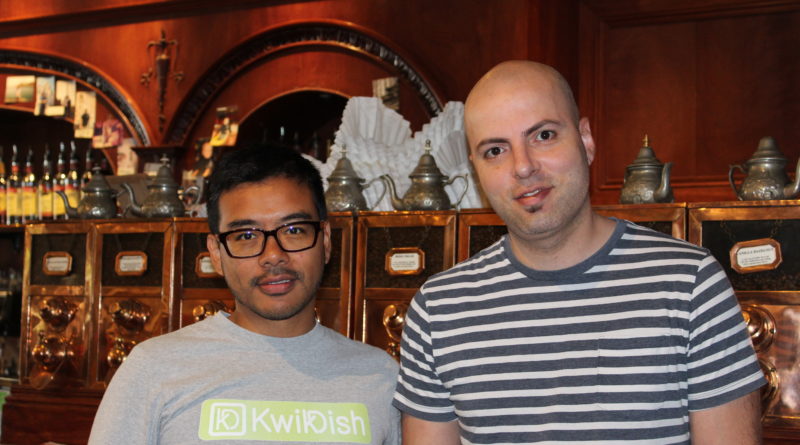
Rolla native AJ Shrestha was determined to start his own business years before he worked as a banker in San Francisco.

Last month, he moved back to Missouri with his food startup KwikDish, an online service that allows users to order lunch for pickup from local restaurants and cooks.

“Our hope is to turn Broadway into a giant cafeteria with healthy, local, fresh food,” Shrestha said, referring to the downtown Columbia street populated with local eateries.

KwikDish offers users a list of meals to pre-order and pick up at restaurants. The menu is posted online at 4 p.m. every day, and users have until 10 a.m. the next day to order. At that point, KwikDish sends the restaurants a final list of customers with order details and pick-up times.

“People don’t hang out in a restaurant. Instead, they get food delivered back home,” Shrestha said. “For the restaurants, it is not a good long-term solution.”

He hopes the pick-up method brings local restaurants an opportunity to sell additional items, as well as to show a personal touch with customers.

The price of a lunch meal ranges between $6 and $9. Users buy meal credits in bulk, choosing from three plans that include different numbers of meals and range in price from $32 to $90, before tax.

“The value on the customer side is saving money and time,” Shrestha said. “(The) price is attractive, and you tell (restaurants) when you are coming, so you don’t have to wait in long lines.”

KwikDish generates revenue by charging a fee of 8 to 10 percent of each transaction. Shrestha said the startup will rely on volume, rather than high margins, to be profitable.

Ever the entrepreneur

“Business has always been in my blood,” Shrestha said. “Ever since I was little, I would have some kind of business that I was running.”

When Shrestha was 15 years old, he started his first business, a game room in Rolla where kids could play sports and video games.

In college, he founded his own web development company, Snowlion Web, and hired young programmers to build websites.

After graduating from Missouri University of Science and Technology with a bachelor’s of electrical and computer engineering and a master’s of electrical engineering, Shrestha embarked on a career in engineering.

“Even as an engineer, I have always seen myself as a guy who loves to build products,” Shrestha said. “I love to make sure the customers see a value for it.”

Driven by his entrepreneurial spirit, he decided to shift gears and learn the language of business. He earned another master’s, in quantitative finance, from Georgia Tech and went on to work for Regions Bank, Raymond James and Deutsche Bank.

“I said to myself that … I will (work in banking) for about five years and after that I am going to do my own thing,” he said.

This year marks the fifth year since he made that pledge. Shrestha gave up his job at Deutsche Bank in February and jumped into entrepreneurship, launching KwikDish with three other co-founders: his wife, Alena Bloshakova, and two friends, Mahesh Dass and Carlos Solortano.

Before Shrestha left his job, he had already recruited a team of 15 people, predominantly engineers and bankers he has worked with. Two of them are full-time employees.

Leveraging local

In the competitive arena of food-delivery startups, even well-funded players like Zesty have struggled to stay in business.

Shrestha acknowledged the risk of jumping into such a competitive industry, but he added that “what really matters is the concept of local.”

Jennifer Goggin, a food-tech entrepreneur and strategic advisor for food-tech startups, said people want to support local farms and restaurants not only for the quality food, but also to keep money in the local economy.

“The question is, can you move them to actually act upon their desire to support the local restaurants?” Goggin said.

In Columbia, more than 30 local restaurants have agreed to put their menus on KwikDish. That group includes Sake Japanese Bistro, India’s House and The Grind Coffee House.

“It is hard in the beginning. (This is) a new face and a new idea from people who are not from the city,” Shrestha said. “But what we are trying to do is really concentrating on helping the local restaurants, and they do appreciate that.”

Issam Yanis of Coffee Zone, a coffee shop and Mediterranean restaurant in downtown Columbia, welcomed the idea because of its “local” emphasis. This is the first time Coffee Zone has joined a food platform.

“I like the idea,” Yannis said. “There are so many similar projects, but it seems this is the most attractive one I have heard of recently.”

He hopes to attract more traffic to Coffee Zone and gain visibility through KwikDish, because his shop is further from the University of Missouri campus than some other coffee shops.

Sonny Sindh, general manager of India’s House, and Indian restaurant in downtown Columbia, has similar expectations. He hopes KwikDish will give his restaurant “more public exposure.”

So far, about 100 customers have registered for KwikDish’s pick-up service. Shrestha said the startup will be more active with marketing as more MU students return to Columbia for the fall semester.

Eye toward expansion

While KwikDish has launched in Columbia and Jefferson City, Shrestha has his sights set on cities like St. Louis, Kansas City and Springfield. But launching in those cities will require more investment.

“The idea is that if you go to Jefferson City for the weekend, you can use the meal plan on KwikDish (to) find something that you know would be a good price point and … local,” said Dass, another of the KwikDish co-founders.

The startup plans to expand to Atlanta and Chicago by the end of the year, the team said. Dass said they have been in touch with angel investors and venture capitalists.

“For every customer we bring in, as long as they stay on or they increase the number of meals they have … that’s all suggesting they are appreciating our platform,” Shrestha said. “The numbers will tell the story.”

The story was published at Missouri Business Alert

WBEZ Worldview: Cambodia’s Crackdown On Free Speech And The Media

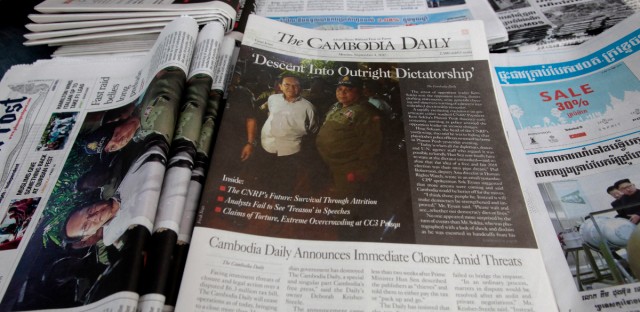
A huge tax bill from the Cambodian government pressured a well-respected independent English newspaper, The Cambodia Daily, to close down last week. 

The Daily was not the only threatened media outlet. In recent weeks, the government has ordered at least 15 radio stations to close or barred them from broadcasting programs, like the U.S.-funded Voice of America and Radio Free Asia. Several NGOs, including the democracy-promoting organization, the National Democratic Institute, were shut down. Last week, opposition leader, Kem Sokha, was charged with treason for allegedly conspiring with the U.S. to overturn the government. 

Are those moves related to the upcoming national election in 2018? What is the future of free speech in Cambodia? We’ll ask Jodie DeJonge, former editor-in-chief of The Cambodia Daily.

Listen to the radio program here

WBEZ Worldview: How Fake News Disrupted Kenya’s Election

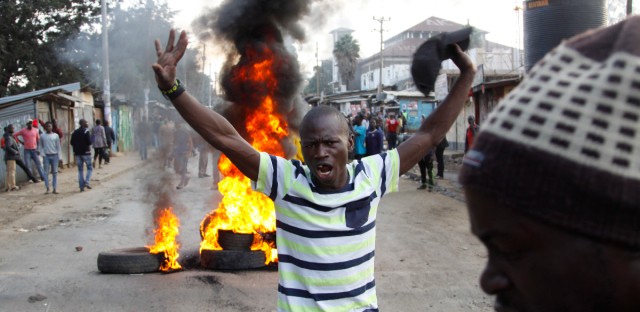
With most of the votes counted in Kenya’s contentious election, President Uhuru Kenyatta is taking a lead over the opposition leader Raila Odinga. Byt Odinga rejected the results, calling them “fake” and claiming the electoral commission’s IT system had been hacked. 

According to GeoPoll, 90 percent of Kenyans have seen or heard fake news around this year’s election, with 87 percent reporting instances of deliberately false or fake news. Ahead of the voting, Facebook offered a tool to spot fake news. To discuss the Kenyan election and the rise of fake news, we’re joined by Alphonce Shiundu, an editor at Africa’s first independent fact-checking organization Africa Check.

Listen to the radio program here

WBEZ Worldview: China Tightens Regulations On VPNs Used To Bypass ‘Great Firewall’

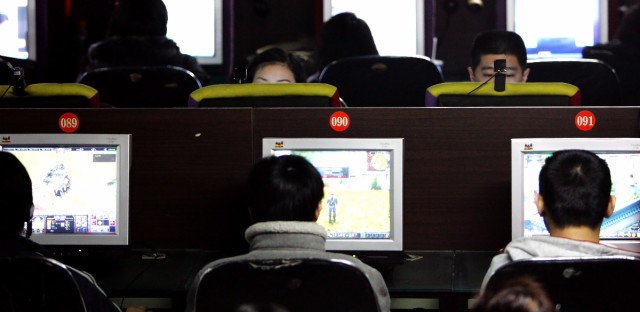
For years, Chinese citizens used virtual private networks to bypass the government’s online censorship that’s sometimes called the “Great Firewall.” However, China recently has issued new regulations on cybersecurity to block VPNs. For more on how the recent VPN crackdowns affect business owners and the tech community, we turn to Yuan Yang, a reporter at the Financial Times covering technology and cybersecurity. 

Listen to the radio program here

North Korea Missile Tests Could Push Japan to Embrace Nuclear Weapons

On Tuesday morning, millions of people in northern Japan woke up to a government text alert warning that a ballistic missile test-fired from North Korea was passing overhead.

The missile was the first from Pyongyang to fly over Japan. Its flight lasted for two minutes before the projectile fell into the Pacific Ocean.

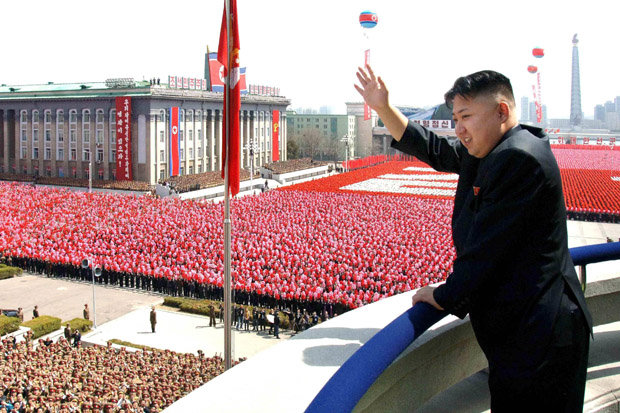
The launch of a North Korean missile towards Japan, a close ally of the United States, has further escalated tensions over leader Kim Jong-un‘s nuclear and ballistic weapons programs.

Japanese Prime Minister Shinzo Abe described the test as “reckless.” Following a 40-minute phone call with U.S. President Donald Trump on Tuesday, Mr. Abe said, “this launch of a North Korean missile is an unprecedented serious and grave threat to Japan.”

“For the first time since 1945, people in Tokyo, where I live, are feeling that we might be attacked by nuclear missile,” Ken Kato, director of Human Rights in Asia, told The Globe Post. “Japanese are mostly peace-loving, moderate and somewhat naïve people, but when the threat reaches a certain point, the whole society changes in a day. That happened a few times in our history.”

Given the short distance between Japan and North Korea, people don’t have much time to take cover in underground shelters or strong buildings in the event of an attack.

“It is obvious that if DPRK is seriously thinking about attacking Japan, Japan will not be able to defend [itself],” Dr. Tatsujiro Suzuki, director at the Research Center for Nuclear Weapons Abolition at Nagasaki University, told The Globe Post.

Dr. Suzuki added, “Many Japanese still trust American military strength (in particular ‘nuclear umbrella’) would deter DPRK to take military action.”

Pyongyang’s move also angered Mr. Trump, who warned on Tuesday that “all options are on the table” going forward.

In response to the missile test, the U.S. sent four advanced jet fighters and a pair of B-1B supersonic bombers over the Korean Peninsula in joint exercises with Japanese and South Korean air forces on Thursday.

The heightened military threat from North Korea also led to a new round of debate on whether Japan should acquire its own missiles, or even develop its own nuclear arms.

During the U.S. presidential election last year, Mr. Trump repeatedly suggested that Washington change its policy regarding Japan owning nuclear weapons. Washington has long maintained that the U.S. nuclear umbrella is adequate and prepared to defend Japan from an attack, provided Tokyo not develop its own nuclear weapons.

Mr. Kato said only conservatives in Japan are currently insisting Tokyo have nuclear weapons. “But if the threat from North Korea intensifies, I believe the majority of Japanese will support the idea. It is not difficult for Japan to develop nuclear weapons,” he said.

Tokyo has long taken a defensive military posture, and its armed forces are only for the sake of self-defense. Yet just two days after the missile test, Japan’s defense ministry is reportedly seeking a record $160 million in funding to add swift, longer-range missiles to its military arsenal.

Dr. Suzuki said public opinion in Japan may lean towards further nuclear reductions. “I don’t think DPRK threat will change Japanese public attitude towards nuclear power. In fact, because nuclear facilities could be potential targets of missile attack, some prefer to shut down existing plants as soon as possible or change the policy to restart the closed plant.”

It is clear that Japan is not Mr. Kim’s main target. Following Tuesday’s missile test, Mr. Kim made it clear that he plans “more ballistic rocket launching drills with the Pacific as a target,” according to North Korean state-run media reports.

The U.S. military demonstrated its ability to intercept a medium-range ballistic missile in the wake of North Korea’s launch. On Wednesday, the Navy and Missile Defense Agency tracked and shot down a test missile near Hawaii using a Standard Missile-6 interceptor missile.

“We will continue developing ballistic missile defense technologies to stay ahead of the threat as it evolves,” Missile Defense Agency Director Lt. Gen. Sam Greaves said.

The story was published at The Globe Post

US To North Korea: Time To Talk Is Over. What’s Next?

Threatening the U.S. with a total nuclear destruction is North Korea’s favorite pastime. But U.S. officials always shrugged off their bombastic rhetoric, downplaying their ability to hit U.S. territories.

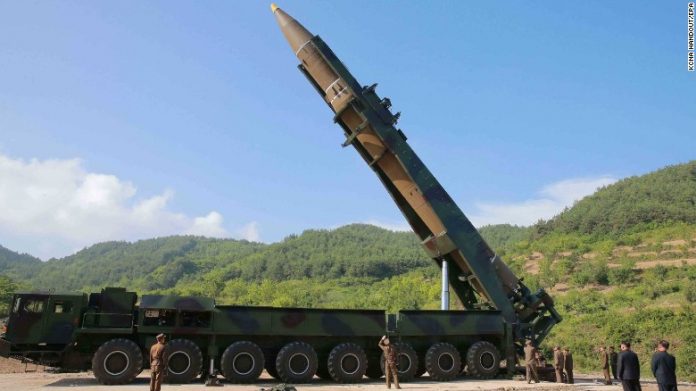
Nevertheless, recent successful tests of intercontinental ballistic missiles (ICBM), which theoretically could reach Alaska, has put Washington on edge. U.S. officials speculate that North Korea is a year away from developing a mini nuclear warhead that could fit on top of these missiles. Experts are still unsure if these missiles are tolerant to re-entry heating.

Last week, North Korea sparked a new round of fear and condemnation with the successful test of the ICBM. U.S. envoy to U.N. Nikki Haley tweeted that the “time for talk is over.”

Missile experts suggested the newly tested missile flew for a distance of 1,000 kilometers for 45 minutes. If fired on a standard trajectory, it could cover major U.S. cities including Los Angeles and Chicago.

“North Korea made a clear demonstration that it now has the capability of hitting the continental US,” Seong-Hyon Lee, senior research fellow at the Center for Korean Peninsula Studies at Peking University, told The Globe Post.

This missile test came just weeks after Pyongyang successfully tested its first ever ICBM. In 2017, North Korea has launched 11 ballistic missile tests.

In the wake of Pyongyang’s nuclear development, President Donald J. Trump vowed to take a tough stand against the regime.

On July 31, he told reporters at a Cabinet gathering that “we will handle North Korea. We’re going to be able to handle them. It will be handled. We handle everything.”

However, given the confusing remarks from the Trump administration, it seems the U.S. is still scrambling to figure out a policy on North Korea.

On Aug. 1, U.S. Secretary of State Rex W. Tillerson stressed that the U.S. is willing to talk with the regime of Kim Jong-Un. “We do not seek regime change. We do not seek an accelerated reunification of the peninsula. We do not seek an excuse to send our military north of the 38th parallel.”

Yet at the same day, U.S. Senator Lindsey Graham said on NBC that if North Korea continues its missile development, the U.S. will apply military operations to “destroy North Korea’s (missile) program and North Korea itself.”

Sangsoo Lee, senior research fellow at the Institute for Security & Development Policy, pointed out that the U.S. options are limited.

“Military measures are too risky and talks are too early since the US believes that North Korea’s nuclear warhead can’t reach the mainland US, as the country still doesn’t have ‘re-entry vehicle’,” he said.

North Korea’s longtime ally, China, seems not have many choices either.

A day after the missile test, Mr. Trump called on China and pressured it into making more action. He tweeted, “I am very disappointed in China. Our foolish past leaders have allowed them to make hundreds of billions of dollars a year in trade, yet they do NOTHING for us with North Korea, just talk. We will no longer allow this to continue. China could easily solve this problem!”

China has been North Korea’s biggest trade partner, representing 85 percent of total North Korean trade, according to a Washington D.C.-based research group C4ADS. In 2016, trade in anthracite coal made up over 46 percent of North Korean total export to China.

In February this year, Chinese Ministry of Commerce banned all coal imports from North Korea. In response to Mr. Trump’s criticism, China defended its efforts and hit back at Mr. Trump’s finger-pointing comment.

Chinese Vice Commerce Minister Qian Keming, replied at a news conference that nuclear issue and China-U.S. trade are “in two completely different domains” that should not be discussed together.

Chinese state media China Daily wrote in an editorial that Mr. Trump’s accusations are “unfair” and referred them as “simply a reflection of what has been his administration’s inaccurate assessment of the situation.”

Meanwhile, the editorial piece highly welcomed Mr. Tillerson’s “more rational perspective.” It is hoped the U.S. will now make concrete moves to translate Mr. Tillerson’s words into action, the editorial wrote, and the North will demonstrate its own sincerity to de-escalating tensions.”

While China was denouncing its small communist neighbor, Sangsoo Lee suggested that “it is unwilling to exert leverage on North Korea that could bring it to the brink of economic collapse and so trigger flows of refugees into China, as well as the US troops in the united Korea under South Korea’s domination.”

Moreover, if adding the South China Sea dispute and U.S. policy pivot in Asia, “China and the US cannot have cooperative relations and… China cannot simply alienate North Korea,” Sangsoo Lee said.

“Indeed, China could recover its relationship with North Korea to counter the US in the region.”

In The Economist’s cover story this week, the magazine said it is worth recalling that America has been here before.

“When Stalin and Mao were building their first atom bombs, some in the West urged pre-emptive strikes to stop them. Happily, cooler heads prevailed,” the Economist said.

Mr. Tillerson will head to Asia later this week for a regional meeting with ministers from North Korea, China, South Korea and Japan to discuss issues such as the denuclearization of the Korean Peninsula.

“The coming days and weeks will be a great disarray as experts and policy makers will be debating this confusing yet very important issue,” Seong-Hyon Lee said.

Before Mr. Tillerson’s visit, the U.S. proposed a draft resolution to be voted at the U.N. Security Council, aiming to cut North Korea’s $3 billion exports by a third.

The resolution will sanction any country purchasing North Korea’s exports of coal, iron, iron ore, lead, lead ore and seafood. Russia and China, as permanent members, must approve the resolution.

The story was published at The Globe Post

Qatar Embargo Came After Trump’s Blessing

Just a week after President Donald J. Trump’s first foreign trip, Persian Gulf is in an unprecedented regional crisis.

Last Monday, Saudi Arabia, the United Arab Emirates, Bahrain and Egypt first announced to break diplomatic ties with Qatar, accusing the tiny Gulf state of supporting terrorist groups such as Muslim Brotherhood. They closed land, air and sea links to Qatar and some have ordered to expel its citizens from their countries.

Qatar and several Gulf nations have been at odds for years, while this rift does follow Mr. Trump’s visit. President Trump himself appears to also take credit for it.

One day after Saudi Arabia’s move, Mr. Trump tweeted, “During my recent trip to the Middle East I stated that there can no longer be funding of Radical Ideology. Leaders pointed to Qatar – look!.”

He then wrote in a series of tweets, “[s]o good to see the Saudi Arabia visit with the King and 50 countries already paying off.” He added, “They said they would take a hard line on funding extremism, and all reference was pointing to Qatar. Perhaps this will be the beginning of the end to the horror of terrorism!”

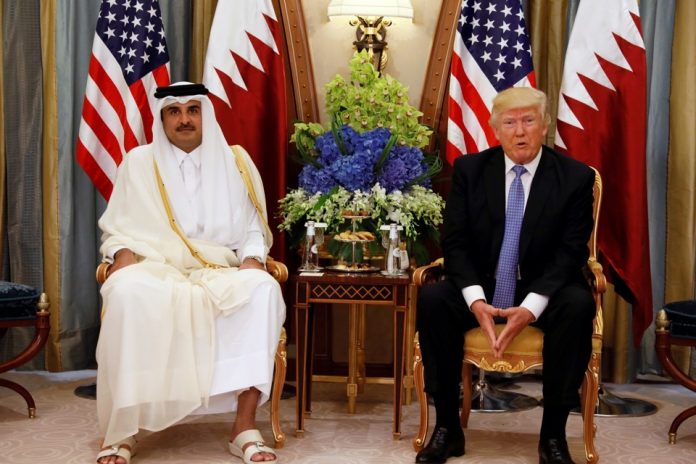
The tweets had bewildered Qatar’s ambassador to Washington and U.S. analysts. During Mr. Trump’s visit to Saudi Arabia, he had met with Qatari leader Emir Sheikh Tamim Bin Hamad Al-Thani and commented Qatar “a crucial strategic partner.” Qatar hosts the U.S. biggest military base in the Middle East to combat terrorism.

Despite Mr. Trump’s claim that he convinced the regional Arab allies to dump Qatar for its support for terrorism, his role is still unclear. It is not, however, surprising that Gulf countries would seek Mr. Trump’s blessing before tightening the noose around the closest U.S. ally in the Gulf.

As Ahmad Majidyar, director of IranObserved Project at Middle East Institute, told The Globe Post, “we cannot just judge by President’s tweets.”

Yet he also said that Mr. Trump’s visit might have played a part, as it sent a very strong signal to the Saudi government in fights against terrorism.

Gregory Gause, head of the International Affairs Department at Texas A&M University, shared a similar view. “I do think that the Emiratis and Saudis were emboldened by Trump’s visit to put pressure on Qatar. They certainly got the impression from the visit that Trump was going to be behind them,” Mr. Gause said to The Globe Post.

After the tweet rant, Mr. Trump is reversing his course. On Wednesday, in his phone call with Qatar leader, Mr. Trump emphasized the importance of uniting to defeat terrorism. He also “offered to help the parties resolve their differences, including through a meeting at the White House if necessary,” according to a White House statement.

He also spoke with Saudi King, Crown Prince of UAE and President of Egypt on the need for regional stability.

The Pentagon and the State Department had tried to ease the tensions. US Secretary of State Rex Tillerson called on Saudi, UAE, Bahrain, and Egypt to “ease the blockade against Qatar” last Friday.

Yet on the same day, Mr. Trump’s speech at the White House Rose Garden sent a different message.

“The nation of Qatar, unfortunately, has historically been a funder of terrorism at a very high level,” he said, asking Doha to “back among the unity of responsible nations.”

The U.S. normally plays as a mediator without picking sides when similar conflicts erupt in the Gulf region. However, as Mr. Gause said, “you have a president who is unpredictable on these things and a Secretary of Defense who is much more in the American diplomatic policy tradition… It was not like a coordinated plan where Trump is playing the bad cop and Secretary of Defense playing good cops.”

In a surprising move, the U.S. signed a $12 billion deal with Qatar to provide them at least 34 F-15 fighters jets.

To add more confusion to the unfolding saga, the U.S. ambassador to Qatar, Dana Shell Smith, announced her resignation on Twitter. It remains unclear whether her decision is related to the current crisis.

Iran and Turkey’s dilemma

Seen as a common threat in many Gulf nations, Iran is cast as a primary culprit in the breakdown of diplomatic relations as well as Mr. Trump’s motivation to tweet against Qatar.

Mr. Majidyar said that President Trump wishes the Gulf nations to unite against Iran. “As Qatar maintains a close relationship with Iran, that does go against with Washington politics.”

The crisis, however, has actually further pushed Qatar closer to Iran.

Iran has sent over 500 tons of food to Qatar with more coming every day, as the Gulf state is suffering the consequences of a closed land border with Saudi Arabia, where 40 percent of Qatar’s food comes from. Iran also opened its airspace for Qatari flights.

Mr. Majidyar pointed out that different voices have emerged in Iran’s government. While some suggested exploiting the crisis to weaken the American alliance and their impact, others had concerns over “unexpected damage” should Iran acts too aggressive.

In addition, Qatar and Saudi had differences in the past and they managed to resolve it. If it happens again, Iran’s investment would be on the line.

Amid the escalating crisis, Turkey also joined the group standing up for Qatar. President Recep Tayyip Erdogan approved to deploy military troops to Qatar and called for a total lifting of the blockade.

“There are those who are uncomfortable with us standing by our Qatari brothers, providing them with food. I’m sorry, we will continue to give Qatar every kind of support,” Mr. Erdogan said in a speech last Friday. “Until now I have not seen Qatar give support to terror.”

Turkey and Qatar cultivated a common strategy for years since the Arab Spring, when different factions of the Muslim Brotherhood thrived, according to Mr. Gause.

“The reason that the Turks are there is a subtle contest of influence within the Sunni community about what Islam means for politics among the Sunni community,” Mr. Gause said.

While Mr. Erdogan’s strong rhetoric appears to indicate Ankara’s stance, Turkey might also encounter a dilemma.

The desire to protect Qatari government to restrain the Gulf nations and the U.S. and to avoid damaging its relationship with Saudi Arabia makes it hard to remain a balance, Mr. Majidyar suggested.

The story was published on The Globe Post